San Sebastián de la Gomera
San Sebastián de la Gomera
The island capital and main service centre, with the principal port, hospital, administration and a compact east-coast town.
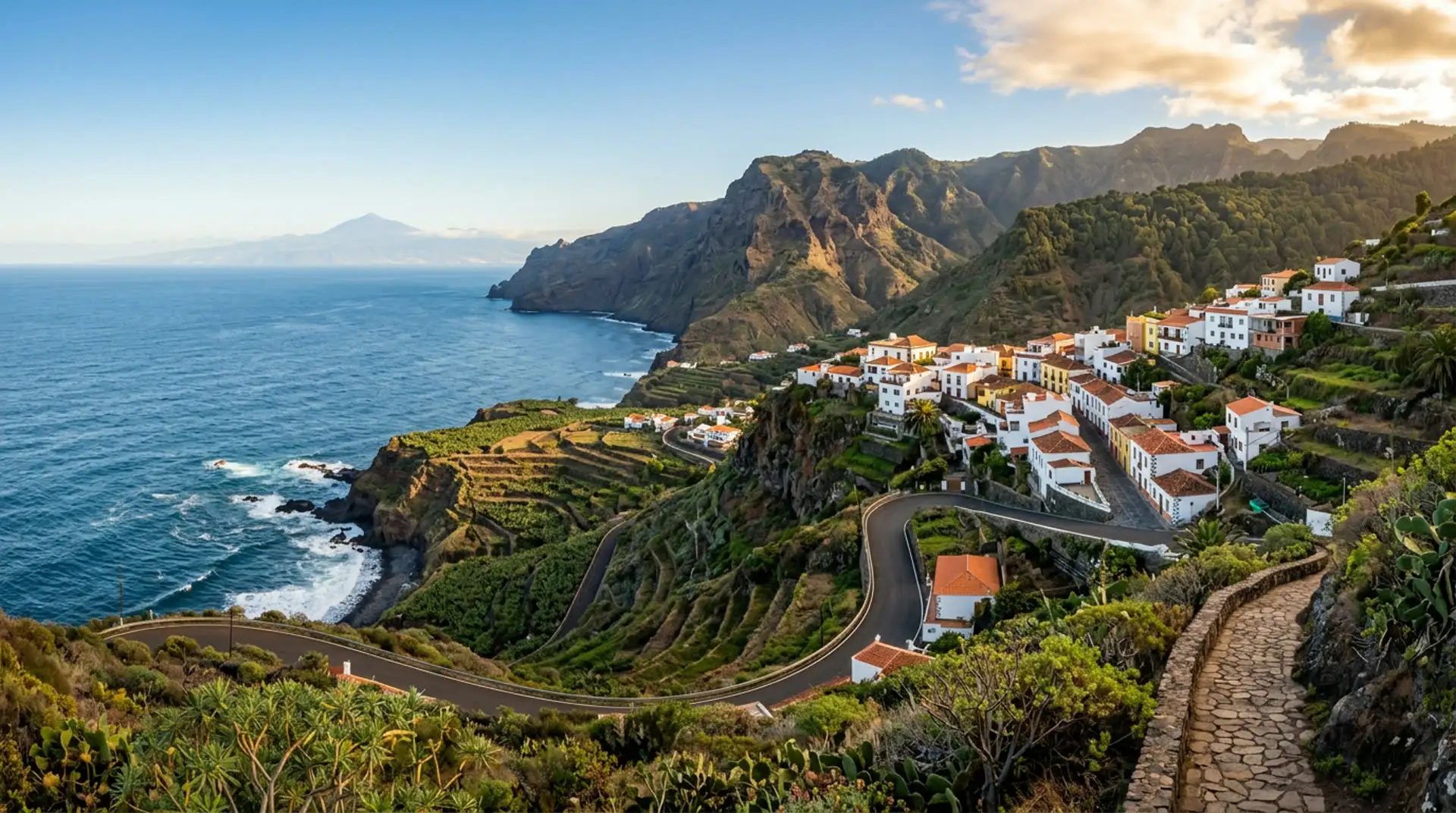
La Gomera is a small island divided by deep ravines and high central forest. San Sebastián is the capital, port and main service centre on the east coast. Valle Gran Rey forms a separate western focus around a long valley and coastal settlements. Hermigua and Agulo occupy the greener north-east, Vallehermoso spreads across the north and west, and Alajeró reaches from southern uplands to Playa Santiago and the airport.
Garajonay's laurel forest fills the central high ground, and roads bend around ravines rather than crossing the island in straight lines. That terrain gives neighbouring valleys distinct daily lives. Silbo Gomero grew from the need to communicate across those slopes and remains part of island culture. The three ferry ports at San Sebastián, Playa Santiago and Valle Gran Rey also make the coast more than scenery: sea connections structure travel between the island's main settlements and beyond.
The trade-off is a close relationship with landscape in exchange for limited scale and indirect travel. San Sebastián offers the broadest services and the island hospital, while the other municipalities are smaller and more dispersed. Specialist care can require a journey to Tenerife, and many routines depend on a car.
The verdict
The upside is real. So is the downside. Both matter more than any brochure will admit.
Six municipalities with clear identities
The capital, western valley, northern villages and southern settlements each support a different relationship with services, coast and landscape.
The central forest is part of everyday geography
Garajonay's laurel forest occupies the island's high centre, shaping roads, views and access between the valleys.
Three ports connect different parts of the island
San Sebastián, Playa Santiago and Valle Gran Rey each serve as coastal gateways, reducing the island's dependence on one harbour.
San Sebastián carries the main services
The capital contains the island hospital, public administration, port and the broadest concentration of everyday amenities.
The terrain makes short map distances misleading
Deep ravines and the central high ground force roads around the landscape, so neighbouring valleys can remain separate in daily life.
Services thin out beyond the capital
Smaller municipalities have fewer shops and public services, making San Sebastián important for many island-wide errands.
Specialist care can require an off-island journey
The island hospital covers local care, while some referrals lead to the reference centre on Tenerife.
Editor's note
La Gomera suits buyers who value a small island, distinct valleys and direct access to protected landscapes more than a broad service base. Tenerife offers much larger urban centres and a wider range of specialist services. Gran Canaria provides a stronger metropolitan alternative, while Lanzarote offers a larger choice of resort areas, inland towns and cultural sites shaped by its volcanic landscape.
La Gomera, all 6 municipalities, INE Annual Population Census, nationality basis, 1 January 2025
Where to live and what to expect at each price point.
The island capital and main service centre, with the principal port, hospital, administration and a compact east-coast town.
A western municipality running down a steep cultivated valley to several coastal neighbourhoods and a ferry port.
A green north-eastern valley of dispersed homes, cultivated slopes and a small coastal edge beneath Garajonay.
A compact northern municipality set on terraces above the coast, with a small historic centre and steep surrounding land.
A broad northern and western municipality of valleys, upland settlements and remote coastal pockets.
A southern municipality linking upland villages with Playa Santiago, the airport and dry coastal slopes.
Honest answers to the questions buyers actually ask.
Transfer tax rates as of August 2026. Rates are set per autonomous community and do change. Confirm the current figures with a Spanish lawyer or tax adviser before you budget.
The pros and the cons of every town, with sourced data on prices, climate and costs.
Your property search, saved cities, mortgage calculator and a step-by-step buying guide, from your first search to getting the keys.
Local agents who speak your language, and owners selling their own home, contact you about homes that fit your search.
Agents and owners ask to connect first. Your contact details are only shared with the people you accept.
Our comprehensive guide covers everything foreign buyers need to know - from NIE numbers and residency permits to mortgages and legal requirements.
Use our free mortgage calculator to estimate monthly payments, compare loan scenarios and understand the true cost of buying in Spain.